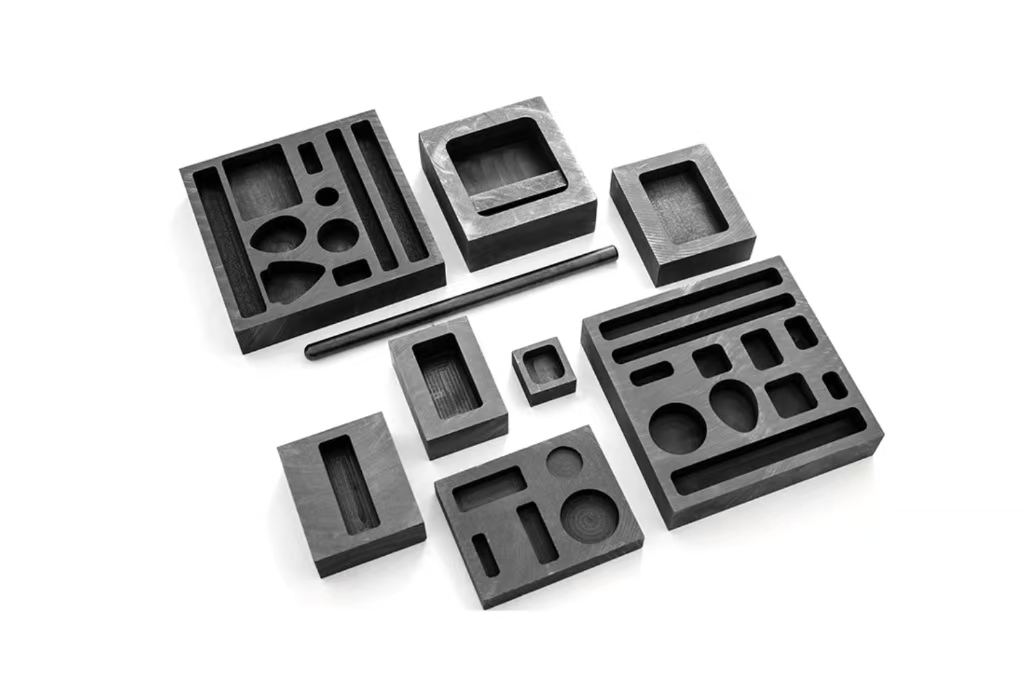

Custom graphite molds are widely used in modern manufacturing because they offer excellent heat resistance, durability, and precision. Industries that work with molten metals, glass, and other high-temperature materials often need molds that can perform under extreme conditions. A standard mold may not always meet specific production needs. This is where custom graphite molds become a valuable solution.
Graphite is a unique material with excellent thermal conductivity and stability. It can handle very high temperatures while maintaining its shape and performance. Manufacturers can machine graphite into different sizes and complex designs, making it suitable for specialized production processes.
This article explains what custom graphite molds are, how they work, their benefits, applications, and the factors to consider when choosing the right mold.
What Are Custom Graphite Molds?
Custom graphite molds are specially designed molds made from high-quality graphite material. Unlike standard molds, they are manufactured according to specific dimensions, shapes, and production requirements.
The customization process allows manufacturers to create mold cavities that match the exact shape of the final product. These molds can be simple or highly complex depending on the application.
Graphite is often selected because it provides several important properties, including:
- High temperature resistance
- Excellent thermal conductivity
- Low thermal expansion
- Good machinability
- Strong chemical stability
- Long service life
Because of these features, custom graphite molds are used in industries where precision and heat resistance are essential.
Why Graphite Is Used for Mold Manufacturing
Graphite has physical and thermal properties that make it suitable for demanding manufacturing environments. One of its biggest advantages is its ability to withstand extreme temperatures.
When molten materials are poured into a mold, the mold must handle rapid heating and cooling. Many materials can crack, warp, or lose their shape under these conditions. Graphite can manage thermal stress effectively.
Another important advantage is thermal conductivity. Graphite can transfer heat efficiently, helping molten material cool in a more controlled manner. This can improve production speed and support consistent product quality.
Graphite is also relatively easy to machine. Manufacturers can create detailed cavities, grooves, holes, and other complex features. This flexibility makes custom graphite molds suitable for products with specialized shapes.
Key Benefits of Custom Graphite Molds
Choosing a custom mold provides several advantages compared with using a standard design. The biggest benefit is that the mold is created specifically for the production process.
High Temperature Resistance
Custom graphite molds can operate in environments involving extremely high temperatures. This makes them useful for casting metals and other heat-intensive applications.
Graphite remains stable at temperatures that would damage many conventional mold materials. The exact performance depends on the graphite grade and operating environment.
Excellent Thermal Conductivity
Heat management is important during the molding process. Graphite transfers heat efficiently, which can support controlled cooling and more consistent production.
Better heat transfer may also help reduce cycle times in certain applications. Faster and more controlled cooling can improve manufacturing efficiency.
Precision and Customization
Every manufacturing process has different requirements. A custom design allows the mold to match the required product dimensions and geometry.
Manufacturers can create detailed mold cavities for simple or complex components. This helps improve accuracy and reduce the need for additional finishing work.
Easy Machining
Graphite can be machined into detailed shapes using modern manufacturing equipment. Features such as channels, holes, slots, and complex cavities can be added according to the design.
This makes graphite a flexible material for prototype development as well as large-scale production.
Good Dimensional Stability
A quality graphite material has relatively low thermal expansion. This helps the mold maintain dimensional stability during temperature changes.
Stable mold dimensions are especially important when manufacturing parts that require tight tolerances.
Common Applications of Custom Graphite Molds
Custom graphite molds are used across many industries. Their ability to perform at high temperatures makes them suitable for several specialized manufacturing processes.
Metal Casting
One of the most common applications is metal casting. Graphite molds can be used for casting materials such as gold, silver, copper, aluminum, and other metals, depending on the process and compatibility requirements.
The mold cavity is designed according to the required final shape. Molten material is introduced into the cavity and allowed to cool and solidify.
Jewelry Manufacturing
Jewelry manufacturers often require precise and detailed shapes. Custom graphite molds can be designed for rings, pendants, coins, and other metal products.
The ability to machine detailed cavities makes graphite useful for specialized jewelry production.
Glass Manufacturing
Certain glass-forming processes also use graphite tooling because of its thermal properties and stability. Custom designs can support the production of specific glass shapes and components.
The smoothness and quality of the graphite surface can influence the final manufacturing result.
Semiconductor and Electronics Industries
Graphite components and molds are also used in high-temperature processes related to electronics and semiconductor manufacturing.
Custom designs can support specialized production equipment where precise dimensions and thermal stability are important.
Continuous Casting
In continuous casting operations, graphite can be used for dies and molds that help shape material during production.
The mold design depends on the required product profile. Custom machining allows manufacturers to create shapes for rods, bars, tubes, and other components.
How Custom Graphite Molds Are Manufactured
The production of custom graphite molds usually begins with a detailed design. Engineers or manufacturers review the required dimensions, material, operating temperature, and production process.
The general process may include the following steps:
- Understanding product requirements
- Selecting the appropriate graphite grade
- Creating a technical design or CAD model
- Machining the graphite block
- Producing cavities and detailed features
- Inspecting dimensions and surface quality
- Testing the mold when necessary
Modern CNC machining can help create accurate and repeatable graphite components. The right equipment and experience are important when producing complex designs.
Choosing the Right Graphite Grade
Not all graphite materials have the same properties. Different grades may vary in grain size, density, strength, thermal conductivity, and purity.
The correct graphite grade should be selected according to the intended application.
Fine-grain graphite may be suitable when a smoother surface and detailed machining are required. Other grades may be selected for improved thermal conductivity or strength.
Important factors include:
- Operating temperature
- Material being processed
- Required surface finish
- Mold complexity
- Production volume
- Dimensional tolerances
- Exposure to chemicals or reactive materials
Working with an experienced manufacturer can help ensure that the selected material matches the production requirements.
Design Considerations for Custom Graphite Molds
A successful mold begins with a good design. The dimensions must account for the behavior of the material being cast or formed.
Shrinkage, cooling rates, material flow, and product geometry can all affect the final result.
The mold may also require additional features such as:
- Pouring channels
- Venting areas
- Cooling sections
- Alignment features
- Release angles
- Multiple cavities
Each feature should support the production process. A well-designed custom graphite mold can improve consistency and reduce material waste.
How to Maintain Custom Graphite Molds
Proper handling and maintenance can help extend the working life of graphite molds. Although graphite performs well at high temperatures, it can still be damaged by improper use or physical impact.
Molds should be stored in a clean and dry environment. They should also be protected from unnecessary impacts, especially around thin sections or detailed features.
Regular inspection can help identify cracks, wear, or surface damage. Cleaning methods should be appropriate for the specific graphite grade and manufacturing process.
Following recommended operating procedures can reduce premature damage and support longer mold life.
Advantages of Working With a Custom Mold Manufacturer
A specialized manufacturer can provide support beyond basic machining. They can help with material selection, mold design, technical drawings, and production planning.
Custom manufacturing also allows businesses to order molds that match their equipment and production goals.
A reliable supplier may offer:
- Custom dimensions
- Different graphite grades
- CNC precision machining
- Prototype development
- Complex cavity designs
- Quality inspection
- Technical support
These services can help manufacturers reduce design errors and improve production efficiency.
Cost Factors for Custom Graphite Molds
The price of a custom graphite mold depends on several factors. Simple designs generally require less machining time than complex molds.
Material quality also affects the overall cost. High-purity or fine-grain graphite may cost more than standard grades.
Other factors include the size of the mold, the number of cavities, required tolerances, surface finish, and production quantity.
While a custom solution may require a higher initial investment, it can provide long-term value when it improves product quality, reduces waste, and supports efficient production.
Conclusion
Custom graphite molds provide a flexible and reliable solution for industries that require precision, thermal stability, and high-temperature performance. Their ability to be machined into specialized shapes makes them useful for metal casting, jewelry production, glass manufacturing, continuous casting, and other demanding applications.
The success of a mold depends on several factors, including the graphite grade, mold design, machining quality, and proper maintenance. Businesses should carefully evaluate their production requirements before choosing a material and design.
By investing in well-designed custom graphite molds, manufacturers can achieve greater accuracy, improved consistency, and better control over their production processes. A carefully selected and professionally manufactured graphite mold can become an important tool for improving efficiency and producing high-quality components.