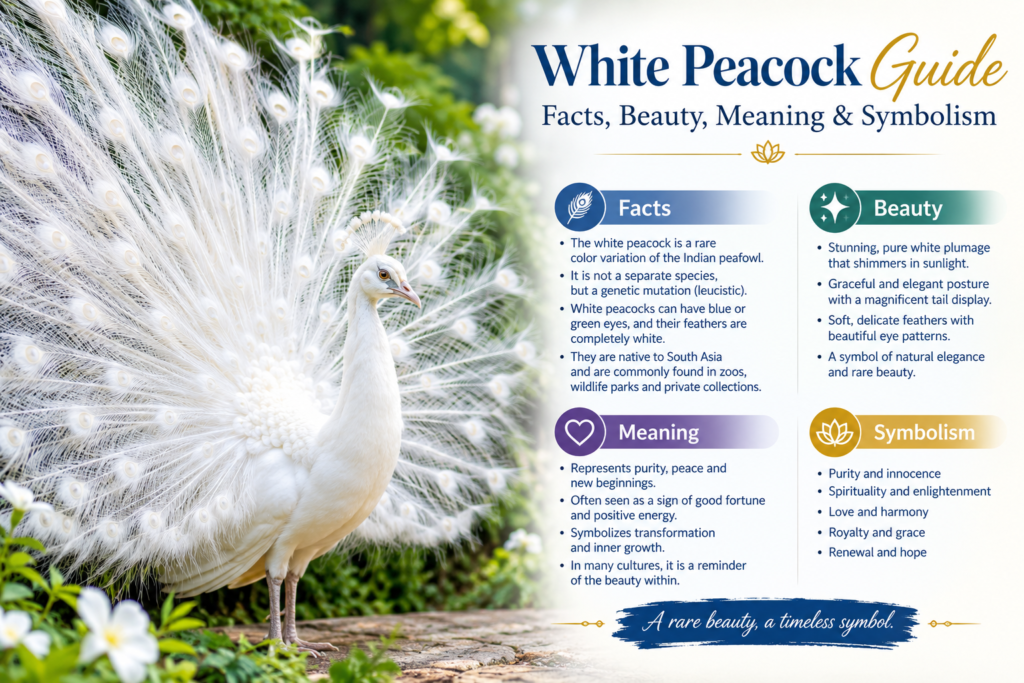

A white peacock is one of nature’s most striking birds. Its bright feathers can look almost magical in sunlight. Unlike the familiar blue and green peacock, this bird has an almost completely white appearance. Its clean color makes it popular in gardens, parks, private collections, and wildlife photography. Many people also wonder if it is a separate species. Usually, it is not. A white peacock is generally a color variation of the Indian peafowl. This unusual appearance comes from a genetic condition called leucism. It affects feather color while often leaving the eyes normally pigmented. This guide explains its appearance, behavior, diet, meaning, and interesting facts. We will also explore the white peacock butterfly, the idea of a purple white peacock, and what people mean by an all white peacock. By the end, you will understand why this beautiful bird attracts so much attention.
White Peacock Profile: Quick Facts
Before exploring its meaning and appearance, it helps to understand the basic facts. The term peacock usually describes the male Indian peafowl. The female is called a peahen, while young birds are called peachicks. White birds can occur in both males and females. However, the male is usually more noticeable because of his long train feathers. A white peacock can spread these feathers during courtship displays. The result is a large fan of white feathers that catches light beautifully. The bird can still behave much like normally colored Indian peafowl. Its white color does not automatically mean it is weaker or sick. However, individual health depends on genetics, care, environment, and breeding conditions.
| Feature | Details |
| Common name | White peacock |
| Scientific species | Indian peafowl (Pavo cristatus) |
| Typical color | White or mostly white |
| Common genetic trait | Leucism |
| Male name | Peacock |
| Female name | Peahen |
| Young | Peachick |
| Diet | Seeds, plants, insects, fruits, and small creatures |
| Main display | Large feather train |
| Natural species range | South Asia |
| Main attraction | Bright white plumage |
| Typical habitat | Woodlands, farms, gardens, and open areas |
| Special trait | Reduced feather pigmentation |
| Main symbolism | Purity, renewal, beauty, and transformation |
What Is a White Peacock?
A white peacock is generally a white color form of the Indian peafowl. It is not usually a separate species. The most common explanation for its appearance is leucism. Leucism reduces pigmentation in feathers. It can create birds with completely white feathers or birds with patches of white. This is different from albinism. Albino animals have a major reduction or absence of melanin throughout the body. Their eyes can also appear reddish or pink. Leucistic birds may still have normally colored eyes. This distinction helps explain why many white peafowl have dark eyes. Their feathers simply lack much of the usual color. Selective breeding can also make this appearance more common in managed populations. In the wild, unusual color forms may face different survival challenges. Their bright feathers can make hiding more difficult. Still, their behavior can remain very similar to that of normally colored peafowl.
Why Is the White Peacock White?
The bright color comes mainly from genetics. Feather color depends on pigments and how light interacts with feather structures. In leucistic birds, pigment production or distribution can be reduced. This creates feathers that appear white instead of blue, green, brown, or bronze. A useful point is that white feathers do not mean the bird is automatically albino. This is one of the most common misunderstandings about these birds. Genetics can produce different levels of white coloring. Some individuals may appear completely white. Others can have small areas of normal coloring. Breeders may also select particular traits over many generations. This can make white plumage more common in certain captive populations. From a visual perspective, the result is impressive. The long feathers can look like flowing ribbons when the male displays them. Sunlight may create soft shadows and subtle textures across the white train. That effect makes these birds especially popular with photographers.
White Peacock Appearance and Feather Train
The appearance of a white peacock is dominated by its pale plumage. Its body, neck, wings, and long display feathers can appear white. The male has the famous train that makes peafowl instantly recognizable. When he raises the train, the feathers create a large circular display. A normal male has colorful eye-like patterns across these feathers. A white male lacks those strong colors. However, the feather structure remains fascinating. Light can create gentle shades and patterns across the train. The bird can also have a crest on its head. Its long neck gives it an elegant profile. The legs remain strong and useful for walking and searching for food. Its bill helps it collect seeds, insects, and other food items. From a distance, the bird may look completely white. Close observation can reveal fine feather details that are easy to miss.
What Is an All White Peacock?
The phrase all white peacock usually describes a bird with white feathers across nearly its entire visible body. It is commonly associated with leucistic Indian peafowl. However, not every white-looking bird has exactly the same genetic background. Some birds can have small colored patches. Others can have nearly complete white plumage. Lighting also affects how people perceive their color. Bright sunlight can make feathers appear pure white. Shade can reveal soft gray or cream tones. An all-white appearance is therefore best understood as a description of plumage. It does not automatically identify a unique species. This distinction matters because internet photos can sometimes create confusion. Filters, editing, and unusual lighting may also change how birds look. If you are identifying one in person, examine its body shape, crest, tail structure, and behavior. These features provide better clues than color alone.
White Peacock Male vs Female
Male and female peafowl have different appearances and roles. The male is called a peacock, while the female is called a peahen. Male peafowl are famous for their large display trains. They use these feathers during courtship. Females usually have shorter tails and less dramatic plumage. A white female can therefore look quite different from a white male. The male’s long train is the easiest feature to notice. During a display, he may raise and shake his feathers. The movement can create a shimmering effect. Females watch these displays when choosing mates. The white peacock can therefore use its unusual appearance as part of courtship. However, feather color alone does not determine whether a bird is male or female. Body size, train length, behavior, and other physical features can help with identification. Young peafowl can be especially difficult to identify because their adult features develop gradually.
White Peacock Behavior and Courtship
Despite its unusual appearance, a white peacock can show many familiar peafowl behaviors. Males may display their feathers when attracting females. They can also make calls that carry across surprisingly large distances. Peafowl spend much of their time walking and searching for food. They may scratch the ground and investigate plants. They can become alert when they sense predators or unfamiliar movement. During the breeding season, courtship becomes especially interesting. The male raises his train and moves it in a controlled display. Feather movement can produce visual signals and sounds. The female can observe the male before deciding whether to approach. This behavior shows why the train is more than a beautiful decoration. It plays an important role in reproduction. Watching a peacock display can also reveal how much movement is hidden inside those large feathers. The bird carefully controls its posture, position, and feather movement.
What Does White Peacock Symbolism Mean?
White peacock symbolism is strongly connected with beauty and transformation. White is often associated with purity, peace, innocence, and fresh beginnings. Peacocks are commonly linked with confidence, beauty, pride, renewal, and self-expression. Combining these ideas creates a powerful symbolic image. Many people view the bird as a reminder to embrace change. Its unusual feathers can represent standing apart from the crowd. The bird can also symbolize grace during personal growth. In some cultural and artistic settings, peacock imagery carries spiritual or ceremonial meanings. However, symbolism varies between cultures and personal beliefs. There is no single meaning that applies everywhere. A person may see the bird as a sign of hope. Another person may connect it with beauty and confidence. This flexibility makes the white peacock popular in art, tattoos, decorations, photography, and wedding themes. Its appearance naturally encourages people to attach deeper meaning to it.
White Peacock Meaning in Dreams and Art
Dream interpretations are personal, but white peacock imagery often suggests beauty, confidence, renewal, or transformation. Some people connect white feathers with a clean beginning. Others see the peacock as a symbol of self-expression. In artwork, the bird can represent elegance and individuality. Its dramatic train creates a strong visual centerpiece. Artists may use white peafowl imagery for paintings, jewelry, clothing, home decorations, and digital designs. The contrast between the white feathers and a darker background can be especially striking. In photography, soft natural light can highlight feather texture without overpowering the subject. However, symbolic meanings should always be treated as interpretations. There is no scientific method for proving that a dream containing a bird predicts a specific event. The value often comes from what the image means to the person. This makes symbolism deeply personal and different from biological facts.
What Is a White Peacock Butterfly?
The white peacock butterfly is completely different from a bird. This name refers to a butterfly species rather than a color form of peafowl. The insect is associated with the genus Anartia and is known for attractive wing patterns. Its name can cause confusion because it shares the word “peacock.” The bird and butterfly are not closely related. One is a bird, while the other is an insect. Butterflies have six legs, antennae, and wings covered with tiny scales. Peafowl have feathers, bones, beaks, and a completely different body structure. The comparison becomes even more interesting because both can display attractive patterns. Their names show how common names can sometimes create confusion. When researching wildlife, scientific names can provide a more reliable way to identify a species. If someone mentions a white peacock butterfly, they are talking about an insect rather than a white-colored peafowl.
Is There a Purple White Peacock?
The phrase purple white peacock is not a standard name for a recognized separate peafowl species. It may describe an image, decorative design, artistic interpretation, or unusual lighting. White feathers can reflect surrounding colors, especially under artificial lights. Photography editing can also create purple or violet tones. In some cases, people may use the phrase for a peacock design that combines white and purple colors. True Indian peafowl can show blue, green, bronze, and purple-like reflections in their feathers. These colors often change depending on light and viewing angle. However, a bird marketed online as a “purple white peacock” should be examined carefully. The name may be informal rather than scientific. When identifying a bird, focus on its species, feather pattern, body shape, and genetic color form. This approach helps separate genuine biological traits from artistic names.
White Peacock Diet and Feeding Habits
A white peacock generally has feeding habits similar to other Indian peafowl. It is an opportunistic omnivore. Its diet can include seeds, grains, fruits, leaves, flowers, insects, and other small food items. In suitable environments, peafowl spend considerable time searching the ground. They may scratch soil and leaf litter while looking for food. Insects can provide useful protein, especially during periods of growth. Plant material supplies other nutrients and energy. Captive birds require a balanced diet rather than random household food. Clean water is also essential. Feeding wildlife can create problems if people provide unhealthy foods or encourage birds to depend on humans. A better approach is to protect natural habitat and provide appropriate care when birds are legally kept under managed conditions. Their natural feeding behavior is also interesting to watch. They move carefully through their surroundings while constantly searching and investigating.
Where Do White Peacocks Live?
Indian peafowl naturally occur across parts of South Asia. They can live in a wide range of environments. These include open woodland, forest edges, agricultural areas, grasslands, villages, and gardens. A white color form can live in managed environments where people keep peafowl. Their ability to adapt helps explain why peafowl are seen in many human-influenced landscapes. They need access to food, water, shelter, and suitable places to rest. Peafowl can also spend time in trees, especially when seeking safer resting locations. At night, roosting above the ground can provide protection from some predators. White birds may face additional visibility challenges in certain natural settings. Their bright plumage can make them easier to notice. In managed environments, however, predators may be less of a concern. Habitat quality remains important for their overall health, regardless of feather color.
White Peacock Lifespan and Health
The lifespan of peafowl depends on many factors. These include genetics, food quality, habitat, disease, predators, stress, and veterinary care. Captive birds may live longer than wild birds when they receive proper care. A white peacock is not automatically unhealthy because of its white feathers. Leucism mainly affects pigmentation rather than making a bird inherently sick. However, individual genetic conditions can vary. Responsible breeding is important when unusual color traits become popular. Breeders should avoid practices that create poor health simply for appearance. Good care includes clean water, suitable food, enough space, shelter, and protection from hazards. Regular observation can also help identify changes in appetite, movement, feathers, or behavior. Anyone keeping peafowl should learn local animal welfare requirements before acquiring birds. Their beauty should never be more important than their health and welfare.
Interesting White Peacock Facts
There are many reasons this bird attracts attention. First, its white feathers can result from leucism rather than albinism. Second, white peafowl can still perform dramatic courtship displays. Third, the male’s long train is made from specialized feathers. Fourth, the bird can be an omnivore and eat both plant and animal foods. Fifth, white plumage can make individuals easier to notice. Sixth, a white peacock is generally a color form rather than a separate species. Seventh, white peafowl are often photographed because their feathers create a strong visual contrast. Eighth, females can also show unusual white coloring. Ninth, the term “peacock” specifically refers to males, while “peafowl” covers the species. Finally, the white peacock has become a popular symbol of elegance and transformation. These facts show why its beauty is connected to interesting biology, not simply appearance.
White Peacock vs Albino Peacock
Many people use the terms “white” and “albino” as if they mean the same thing. They do not. A white peacock is often leucistic. Leucism reduces pigmentation in feathers while leaving other pigmentation relatively normal. Albinism involves a different genetic process related to melanin production. Albino animals often show characteristic changes in eye pigmentation. This difference is useful when identifying unusual birds. However, photographs may not always provide enough information for a definite diagnosis. Lighting can also make a bird look brighter than it really is. Therefore, it is better to avoid labeling every white bird as albino. A careful description such as “white-plumaged peafowl” can be more accurate when genetics are unknown. This distinction also prevents misinformation from spreading online. When discussing unusual animal colors, biological terminology matters because similar-looking traits can have very different genetic causes.
Why Are White Peacocks So Popular?
The beauty of a white peacock comes from its unusual combination of shape and color. Its long train already creates an impressive silhouette. White feathers make that silhouette even more dramatic. Against green grass, dark trees, or colorful flowers, the bird can look almost unreal. This makes it attractive for photography and visual design. White peafowl also appear in wedding decorations, gardens, resorts, and artistic displays. Their appearance fits themes involving elegance, purity, luxury, and new beginnings. Social media has further increased interest because striking wildlife images can spread quickly. However, popularity can sometimes encourage irresponsible breeding or unsuitable ownership. People interested in these birds should research care requirements first. A beautiful animal still needs proper space, nutrition, safety, and responsible handling. Appreciation is best when it supports good welfare rather than treating the animal as a simple decoration.
How to Identify a White Peacock
Identifying a white peacock is easier when you look beyond feather color. Start with the overall body shape. Indian peafowl have a distinctive upright posture and a small crest on the head. Adult males have very long train feathers. The tail and train can be raised during courtship. The bird also has strong legs and a recognizable head and neck shape. If the bird is completely white, check its eyes and other physical features. Remember that color alone cannot prove whether it is leucistic or albino. Photographs can also be misleading because exposure and editing change white tones. If you are identifying a bird from a distance, use several characteristics together. This method is more reliable than relying on a single unusual feature. When in doubt, consult an experienced avian specialist or wildlife professional.
Frequently Asked Questions About White Peacock
1. Is a white peacock a real bird?
Yes. A white peacock is a real peafowl color form. Many white individuals are associated with leucism. Their feathers contain greatly reduced pigmentation. They are generally not considered a separate species. They can still display normal peafowl behaviors. Their courtship displays can be especially impressive because the white train creates a dramatic visual effect.
2. Are white peacocks albino?
Not usually. Many white peafowl are leucistic rather than albino. Leucism mainly affects pigmentation in feathers. Albinism involves a different genetic condition affecting melanin production. White birds can therefore have normally pigmented eyes. A photograph alone may not always provide enough information for a precise genetic identification.
3. What does a white peacock symbolize?
White peacock symbolism often includes purity, beauty, transformation, confidence, peace, and renewal. Meanings can vary by culture and personal belief. Some people see the bird as a symbol of fresh beginnings. Others connect it with elegance and individuality. These interpretations are symbolic rather than scientific facts.
4. What is the difference between a white peacock and a white peacock butterfly?
They are completely different animals. A white peacock is a bird. A white peacock butterfly is an insect. Butterflies have six legs, antennae, and wings covered with scales. Peafowl have feathers, beaks, and bones. Their shared name comes from visual or naming associations rather than biological relationships.
5. What is a female white peacock called?
A female peafowl is called a peahen. Therefore, a white female Indian peafowl can be called a white peahen. The term “peacock” specifically refers to the male. “Peafowl” is the broader term for the species. Young birds are called peachicks, regardless of whether they are male or female.
6. Can white peacocks have colored feathers?
Yes. Not every white peafowl has perfectly white feathers. Some individuals can show small areas of normal coloring. Genetic differences can create different patterns of pigmentation. Lighting can also change how white feathers appear. For this reason, white plumage can range from mostly white to nearly completely white.
Conclusion
The white peacock is a remarkable example of how genetics can create extraordinary natural beauty. Its white feathers make it instantly recognizable, while its behavior remains closely connected to ordinary Indian peafowl. Leucism is one important reason behind its unusual appearance. The bird should not automatically be described as albino. Its symbolism is equally fascinating. Many people associate it with purity, confidence, transformation, peace, and new beginnings. It is also important to separate the bird from the white peacock butterfly, which is an entirely different creature. Whether you admire these birds for photography, wildlife, symbolism, or simple beauty, there is much more to discover. If you encounter one, take time to observe its feathers, posture, movement, and behavior. Sometimes the most beautiful animals become even more interesting when we understand the science behind their appearance.