
Introduction
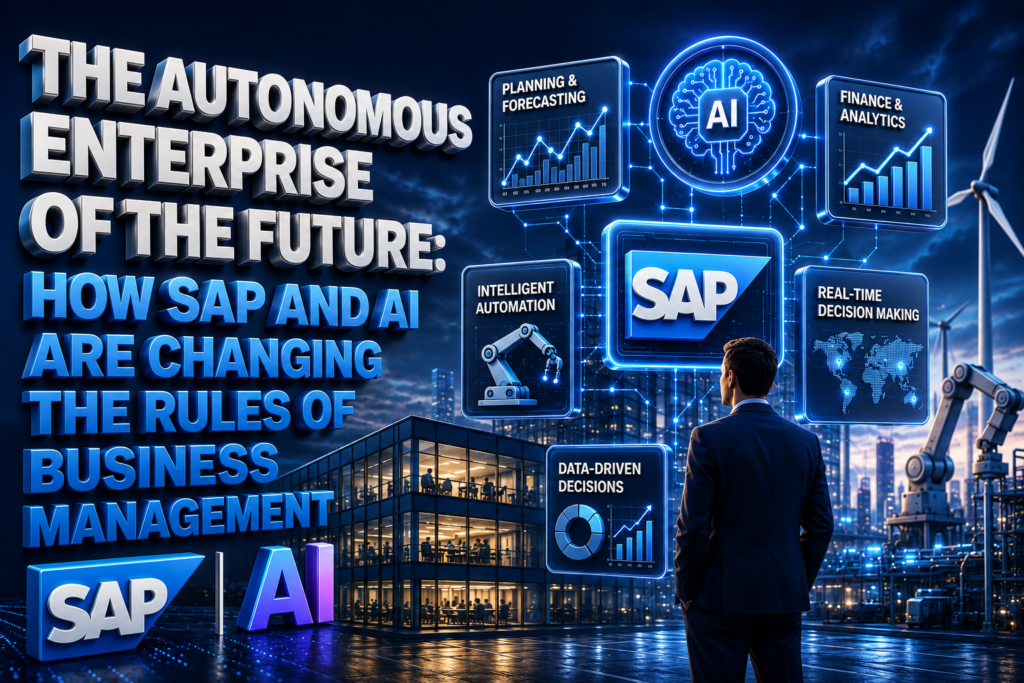
Organizations across industries are under constant pressure to improve efficiency, accelerate decision-making, and respond quickly to changing business conditions. Digital transformation initiatives are increasingly focused on intelligent technologies that can automate processes, uncover insights, and optimize operations. AI in SAP Business Transformation is helping enterprises achieve these goals by combining artificial intelligence with core business processes, enabling smarter planning, faster execution, and more informed decision-making.
As businesses continue investing in enterprise modernization, understanding the role of AI within SAP environments has become essential for maintaining competitiveness, improving agility, and supporting long-term growth strategies.
Understanding AI-Powered Enterprise Transformation
Artificial intelligence is reshaping how enterprises operate by introducing intelligent automation, predictive capabilities, and advanced analytics into everyday business processes. Within SAP ecosystems, AI helps organizations streamline operations while improving the quality and speed of decision-making.
Key capabilities include:
- Intelligent workflow automation
- Predictive analytics
- Real-time insights
- Automated decision support
- Process optimization
These capabilities allow organizations to move beyond traditional reporting and adopt proactive business management strategies that improve efficiency and operational performance.
Intelligent Automation Across Business Processes
One of the most impactful applications of AI is the automation of repetitive and time-consuming business activities. Organizations often manage thousands of transactions and operational workflows every day, making automation an important driver of productivity.
AI-powered automation helps enterprises:
- Reduce manual intervention
- Improve process consistency
- Accelerate workflow execution
- Minimize operational delays
- Improve resource utilization
From invoice processing and procurement approvals to employee onboarding and customer service workflows, intelligent automation helps businesses increase efficiency while allowing teams to focus on higher-value activities.
Predictive Analytics and Business Intelligence
Predictive analytics has become a critical component of enterprise transformation. By analyzing historical and real-time data, AI systems can identify trends, forecast outcomes, and support strategic planning initiatives.
Common applications include:
- Revenue forecasting
- Demand prediction
- Risk analysis
- Customer behavior insights
- Inventory planning
Organizations that leverage predictive analytics can make more informed decisions and respond proactively to changing market conditions. Rather than relying solely on historical reporting, decision-makers gain access to forward-looking insights that improve planning accuracy and business responsiveness.
Many enterprises view AI in SAP Business Transformation as a foundation for creating intelligent organizations that continuously learn from operational data and improve decision-making processes.
Enhancing Supply Chain and Operational Planning
Supply chains have become increasingly complex, making visibility and forecasting more important than ever. AI technologies help organizations process large volumes of operational data and generate insights that improve planning efficiency.
Benefits include:
- Improved demand forecasting
- Inventory optimization
- Better resource allocation
- Reduced operational disruptions
- Enhanced supply chain visibility
AI-driven planning models can identify patterns that may not be visible through traditional analysis methods. This enables organizations to anticipate challenges earlier, reduce inefficiencies, and improve operational resilience across global supply networks.
As enterprises seek greater flexibility and responsiveness, AI continues to play a growing role in supply chain transformation initiatives.
Improving Financial Management with AI
Finance departments are increasingly adopting intelligent technologies to improve reporting accuracy, forecasting capabilities, and operational efficiency.
AI applications within finance include:
- Automated reconciliations
- Cash flow forecasting
- Fraud detection support
- Financial trend analysis
- Expense monitoring
By automating repetitive financial processes, organizations can reduce administrative effort while improving accuracy and compliance. AI also helps finance leaders identify patterns within large datasets, providing greater visibility into business performance and supporting more strategic financial planning.
These capabilities contribute to stronger governance, improved operational control, and more efficient resource management.
Data-Driven Decision Making Across the Enterprise
Modern organizations generate significant amounts of data through operational systems, customer interactions, and business processes. Turning this information into actionable insights is essential for achieving business objectives.
This aligns with data science consulting, where advanced analytics and predictive modeling help organizations uncover opportunities, improve performance, and support strategic initiatives.
Combining AI with enterprise data allows decision-makers to:
- Identify emerging trends
- Improve operational visibility
- Reduce business risks
- Optimize resource allocation
- Support long-term planning
A data-driven culture enables organizations to make faster and more confident decisions across departments.
Integration of AI with Enterprise Systems
Successful transformation initiatives depend on seamless integration between intelligent technologies and enterprise platforms. AI solutions must work effectively with operational systems to deliver meaningful business value.
This connects with sap technology services, which help organizations:
- Integrate enterprise applications
- Improve data connectivity
- Streamline workflows
- Support digital transformation initiatives
- Enhance operational visibility
Strong integration frameworks ensure that AI-generated insights can be applied directly to business processes, helping organizations move from analysis to action more effectively.
Customer Experience and Personalization
AI is also transforming customer engagement by helping organizations understand user behavior and deliver more personalized experiences.
Benefits include:
- Personalized recommendations
- Improved customer insights
- Faster response times
- Enhanced service experiences
- Better engagement strategies
By analyzing customer interactions across multiple channels, AI systems help organizations identify preferences, anticipate needs, and improve satisfaction. This creates stronger customer relationships while supporting revenue growth and brand loyalty.
As customer expectations continue evolving, personalization has become a major driver of competitive differentiation.
Challenges of Implementing AI in Enterprise Environments
While AI offers substantial benefits, successful implementation requires careful planning and governance.
Common challenges include:
- Data quality concerns
- Integration complexity
- Change management requirements
- Skill gaps within teams
- Regulatory and compliance considerations
Organizations must establish clear objectives, governance frameworks, and implementation roadmaps to maximize the value of AI investments. Addressing these challenges early helps reduce risk and improves the likelihood of long-term success.
Enterprise Adoption and Transformation Strategies
Enterprise AI adoption is accelerating as organizations seek to improve efficiency, innovation, and competitiveness. However, successful transformation requires more than technology implementation alone.
Many organizations leverage SAP Consulting services to:
- Define transformation roadmaps
- Identify automation opportunities
- Align technology with business objectives
- Improve operational efficiency
- Accelerate modernization initiatives
A structured approach helps organizations prioritize high-impact initiatives while ensuring that technology investments generate measurable business outcomes. Strategic planning, stakeholder alignment, and continuous optimization are essential components of successful transformation programs.
Future Trends in Intelligent SAP Ecosystems
The future of enterprise technology will involve deeper integration between artificial intelligence and business operations. Organizations are increasingly moving toward intelligent ecosystems that automate decision-making and optimize performance in real time.
Emerging trends include:
- Autonomous business processes
- Advanced predictive planning
- Real-time decision support
- Intelligent process orchestration
- AI-driven operational optimization
These innovations will help enterprises become more agile, responsive, and data-driven. As AI capabilities continue evolving, organizations that embrace intelligent transformation strategies will be better positioned to adapt to changing market conditions and emerging opportunities.
Conclusion
Artificial intelligence is becoming a key driver of enterprise modernization, enabling organizations to automate processes, improve decision-making, and optimize operational performance. AI in SAP Business Transformation provides a framework for combining intelligent technologies with core business processes to create more efficient, agile, and scalable enterprises.
Understanding AI in SAP Business Transformation helps organizations identify opportunities to enhance planning, strengthen operational visibility, and improve long-term business outcomes. As enterprises continue investing in intelligent technologies, experienced digital transformation partners such as Pattem Digital can help implement scalable solutions that align innovation with strategic business objectives.