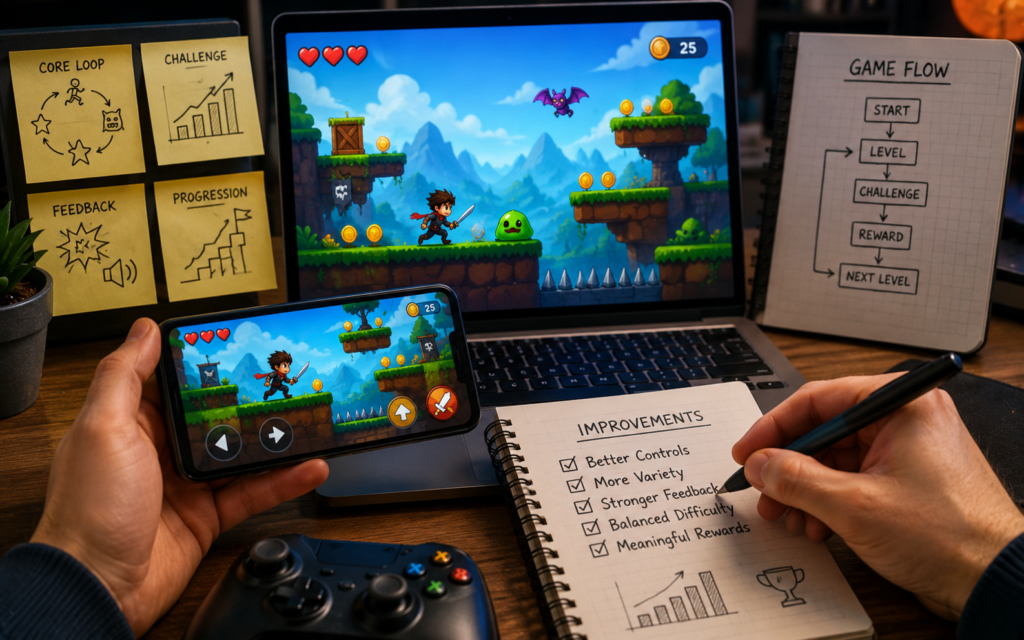

You spent time creating a game with AI tools. The visuals look decent, and the basic idea works, yet something feels wrong. Players try it for a few minutes, then leave without coming back. The gameplay feels flat, repetitive, or simply not fun enough. This problem is very common in AI-generated games, and it stops many promising projects from succeeding.
The good news is that weak gameplay can be fixed with clear, targeted improvements. You do not need to start over. Small changes to the core loop, challenge, feedback, and progression can transform a boring experience into one that keeps players coming back. This guide explains the main causes of weak gameplay and gives straightforward steps to make your game more enjoyable and addictive. Follow these methods and your AI generated game will feel much stronger and more satisfying to play.
Understanding Why Gameplay Feels Weak
Weak gameplay usually comes from a core loop that lacks excitement or depth. The player performs the same action repeatedly with little variation or sense of progress. AI tools often create functional mechanics but miss the small details that make actions feel rewarding.
Another common issue is unbalanced difficulty. Early parts may be too easy while later sections become suddenly hard without warning. Poor feedback also weakens the experience because players do not feel the impact of their choices. When these problems combine, the game fails to hold attention even if the concept is good. Recognizing these issues is the first step toward fixing them.
Four Main Causes of Weak Gameplay
Several frequent problems make AI generated games feel unsatisfying.
- Repetitive Actions: The main mechanic stays exactly the same with no meaningful changes or surprises.
- Lack of Clear Goals: Players do not understand what they should achieve or why they should continue.
- Weak Feedback: Successes and failures produce little response so actions feel empty.
- No Sense of Growth: There is no visible progress or rewards that make players feel they are improving.
Identifying which issues affect your game helps you focus your fixes where they matter most.
Strengthening the Core Gameplay Loop
The core loop is the repeated action players perform throughout the game. Make it more engaging by adding small layers of variety. For example, if the main action is jumping, introduce different types of platforms, moving obstacles, or special items that change how jumping works. Test the loop many times and ask whether it still feels good after twenty minutes. If it becomes boring, add light randomness or new combinations of existing elements. Small improvements here create the biggest difference in how fun the game feels overall.
Adding Challenge and Progression
Players enjoy viral games that feel fair but keep them thinking. Start with easy levels that teach the basics then gradually increase difficulty. Introduce new obstacles or rules at natural points so players learn and adapt rather than feel overwhelmed. Create visible progression through level numbers, score milestones, or unlockable features. These elements give players clear goals and a sense of achievement. In AI generated games, set rules that make each new area slightly more challenging while keeping the same core controls. This approach prevents sudden difficulty spikes and keeps the experience balanced.
Four Practical Ways to Improve Gameplay
- Add meaningful rewards for completing sections or reaching targets.
- Introduce light variety in obstacles, items, or environments.
- Improve feedback with clear visual and sound responses to every action.
- Balance difficulty so each new challenge feels like a natural next step.
These changes make the gameplay feel deeper without making the game more complicated.
Refining Flow and Player Experience
Good flow means the game moves smoothly from one moment to the next without awkward pauses or confusion. Shorten transitions between levels and ensure the main goal stays visible at all times. Add gentle guidance, such as highlighted paths or short tip messages, when players seem stuck. Test the full experience as a new player would. Walk through every section and note any moments that feel slow or unclear. Small timing adjustments and clearer feedback often turn average gameplay into something much more enjoyable.
A strong example of engaging gameplay appears in Chaos Race. You can try it on Astrocade. Notice how the core actions feel satisfying, and the progression keeps things interesting.
Testing Gameplay Improvements
After making changes, test thoroughly. Play multiple sessions and note which parts feel the strongest and which still need work. Ask a few friends to try the updated version and listen carefully to their comments. Focus on whether the game holds attention after the first few minutes. Make one adjustment at a time and retest so you can see exactly what helps. Good testing turns weak gameplay into something players genuinely enjoy.
Keeping Improvements Focused
Focus your efforts on the parts players experience most often. Perfect the main action and first few levels before expanding. Small, consistent improvements throughout the game create better results than many scattered changes. As you add new features, always check that they support the core gameplay rather than making it more complicated. Regular testing keeps the experience strong as the game grows.
Wrapping Up
Weak gameplay in AI generated games usually comes from repetition, unclear goals, poor feedback, and a lack of progression. By strengthening the core loop, adding meaningful challenges, improving feedback, and creating clear progression, you can fix these issues and make your game much more engaging. Whether you build your games with Astrocade or other easy tools, these practical steps help you create experiences that players want to keep playing. Start by identifying the weakest parts of your current gameplay and improving one area at a time. Test regularly and listen to real player feedback.
With steady attention to these details, your game will stop feeling weak and start delivering the fun and satisfaction players look for. The difference between an average game and one that players love often comes down to these gameplay improvements. Take the time to refine your game, and you will see much better results and happier players.