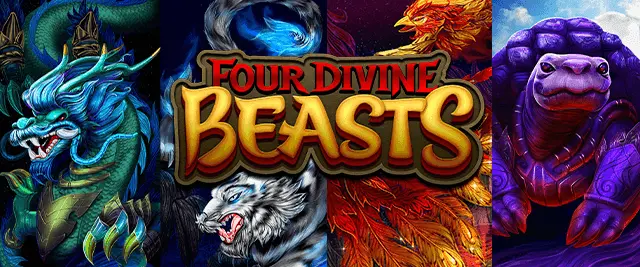

The tapestry of ancient Chinese mythology is rich with vivid imagery, profound cosmic philosophies, and legendary entities that have shaped East Asian culture for millennia. Among the most enduring and deeply revered figures in this spiritual and astronomical landscape are the Four Divine Beasts, also known as the Four Auspicious Beasts or the Four Guardians. These mythological creatures are not merely monsters or folk legends; they represent an intricate system that blends astronomy, geography, philosophy, and five-element theory into a cohesive worldview.
For thousands of years, these guardians have been viewed as the literal pillars of the universe, responsible for regulating the seasons, safeguarding the cardinal directions, and maintaining the delicate balance of cosmic energy. To understand the Four Divine Beasts is to understand how ancient civilizations viewed their relationship with the cosmos, balancing the forces of nature with human destiny.
The Origins and Astronomical Foundations of the Guardians
Long before these entities were personified as divine animals in literature, they were observed in the night sky. Ancient Chinese astronomers divided the ecliptic sky into four massive regions, known as the Four Palaces, with each palace representing a cardinal direction and a specific season. Within these four palaces lie the twenty-eight lunar mansions, which served as a celestial calendar tracking the movement of the moon and the progression of the year.
As stargazers mapped out the clusters of stars within each palace, they began to see shapes emerge, much like Western constellations. The eastern stars resembled a magnificent dragon, the southern stars took the shape of a soaring bird, the western stars formed a powerful tiger, and the northern stars outlined a tortoise intertwined with a snake.
Over centuries, these celestial shapes transformed into the potent mythological guardians celebrated across Asia. This system became deeply intertwined with Wuxing, the Five Elements theory that governs traditional philosophy, medicine, and martial arts. Through this integration, each beast was assigned an element, a color, a season, and a virtue, turning a system of stargazing into a profound philosophy for understanding life on Earth.
The Azure Dragon of the East
Representing the east, the Azure Dragon, known as Qinglong, is perhaps the most famous and universally recognized of the Four Divine Beasts. The east is where the sun rises, signifying the birth of a new day, renewal, and hope. Consequently, the Azure Dragon is the undisputed ruler of the spring season. It controls the element of wood, a force associated with growth, vitality, flexibility, and expansion.
Physically, the Azure Dragon is a majestic creature featuring the scales of a fish, the antlers of a deer, and the talons of an eagle, shimmering in brilliant shades of blue and green. Unlike Western dragons, which are frequently depicted as destructive, fire-breathing monsters, the Azure Dragon is a benevolent entity. It is a symbol of supreme power, nobility, and good fortune, closely associated with the Emperor of China.
As a master of weather, the Azure Dragon controls the clouds and rain, bringing gentle spring showers to nourish the crops. In ancient agricultural societies, the appearance of the Dragon constellation in the spring sky signaled that it was time to plow the fields, marking it as a bringer of prosperity, wealth, and abundance.
The Vermilion Bird of the South
Soaring across the southern skies is the Vermilion Bird, known as Zhuque. The south represents the peak of warmth, light, and energy, making the Vermilion Bird the ruler of the summer season. It is intrinsically tied to the element of fire, embodying passion, transformation, brilliance, and high energy.
The Vermilion Bird is frequently confused with the Western phoenix or the Chinese Fenghuang, but it is a distinct mythological entity. It is a majestic, elegant bird engulfed in perpetual flames, sporting feathers of brilliant red, orange, and gold. It is said to be incredibly selective, only appearing during times of peace and righteous governance.
Because of its association with fire and the summer solstice, the Vermilion Bird represents the ultimate expression of Yang energy, which is bright, active, and creative. It symbolizes beauty, luck, and the ability to rise above adversity, providing light and warmth to guide those who are lost in darkness.
The White Tiger of the West
Guarding the western frontier is the formidable White Tiger, known as Baihu. The west is the place where the sun sets, marking the end of the day, a time for harvesting, and a period of reflection. Therefore, the White Tiger is the ruler of the autumn season. It is aligned with the element of metal, which represents strength, justice, boundary-setting, and sharp execution.
In Chinese culture, the tiger is revered as the king of all wild animals, and a white tiger is exceptionally rare and sacred. It is believed that a tiger’s fur turns white only after it has lived for five hundred years and achieved spiritual enlightenment. The White Tiger possesses immense martial strength and a fierce disposition, making it the supreme protector against evil spirits and malevolent forces.
While the Azure Dragon represents the gentle, creative forces of life, the White Tiger represents the destructive yet necessary forces of nature and justice. It is the patron guardian of soldiers, generals, and martial artists. Its presence on shields, talismans, and military flags historically served to strike fear into the hearts of enemies while ensuring the safety and protection of the innocent.
The Black Tortoise of the North
Completing the celestial circle in the cold, dark north is the Black Tortoise, known as Xuanwu. The north represents darkness, stillness, and looking inward, making the Black Tortoise the ruler of the winter season. It is deeply connected to the element of water, which symbolizes wisdom, fluidity, adaptability, and hidden depths.
The physical depiction of Xuanwu is unique and fascinating. Rather than a simple turtle, it is almost always portrayed as a massive, armored black tortoise intimately entwined with a powerful serpent. This dual imagery represents the perfect union of Yin and Yang energies, with the stable, defensive tortoise embodying Yin and the active, striking serpent embodying Yang.
Because tortoises are famously long-lived creatures, the Black Tortoise is a universal symbol of longevity, immortality, and indestructible strength. Its thick, heavy shell represents an unbreachable shield, making it a powerful guardian against disasters and unforeseen calamities. Furthermore, because water flows deep and silent, Xuanwu is also revered as a symbol of profound spiritual wisdom, meditation, and esoteric knowledge.
The Cultural Legacy and Modern Influence
The influence of the Four Divine Beasts stretches far beyond ancient scrolls and star charts. Their symbolism heavily impacted the architecture of ancient capitals and palaces. Forbidden City layouts and traditional courtyard homes were designed around these cardinal directions, featuring protective walls to the north to block cold winds and open spaces to the south to invite light and warmth.
As Chinese culture spread across East Asia, the concept of the four guardians was adopted and woven into the fabric of neighboring nations. In Japan, they became known as the Shishin, guarding historic cities like Kyoto and Nara. In Korea, they are known as the Sasin, immortalized in the intricate murals of ancient Goguryeo tombs.
Today, these legendary beasts continue to captivate the modern imagination. They are frequently featured in contemporary popular culture, appearing as powerful entities in video games, anime, manga, fantasy novels, and movies. Their enduring popularity proves that the human fascination with cosmic balance, protection, and the majestic forces of nature is truly timeless.
Conclusion
The Four Divine Beasts stand as a brilliant testament to the human desire to find harmony, order, and meaning within a vast and chaotic universe. By transforming the stars above into guardians of the earth below, ancient philosophers created a beautifully poetic framework that balanced the changing of the seasons, the elements of nature, and human morality. Whether viewed as ancient constellations, architectural blueprints, or symbols of inner virtue, the Azure Dragon, Vermilion Bird, White Tiger, and Black Tortoise serve as a powerful reminder of our deep, unbreakable connection to the natural world and the cosmos around us.