
Steel stamping services have become an essential part of the metal manufacturing industry. They provide an efficient way to turn steel sheets, strips, and coils into useful components with repeatable shapes and accurate dimensions. Using specialized presses and dies, manufacturers can produce everything from small brackets to complex industrial parts.
Businesses across automotive, construction, electronics, appliances, machinery, and other sectors rely on steel stamping because it combines speed, flexibility, and dependable production. With suitable planning, the process can also help reduce material waste and maintain competitive manufacturing costs.
What Are Steel Stamping Services?
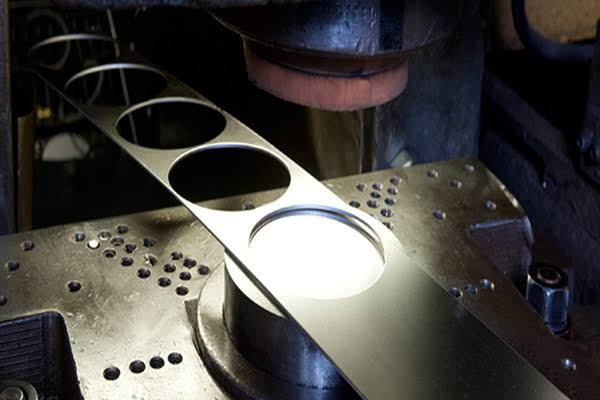
Steel stamping services are professional manufacturing solutions that use pressure to cut and form steel into specific shapes. The process generally involves a stamping press, a punch, and a die.
The steel material is positioned inside the die. When the press applies force, the punch pushes the material into or through the tooling. This creates the required shape or feature.
Depending on the component, stamping may involve one operation or several stages. A manufacturer may cut the material first, create holes next, and then bend or form it into the final configuration.
Professional steel stamping services can cover the entire process from design and tooling to production and inspection.
What Happens Before Production Starts?
Successful stamping begins long before the press starts operating. Engineers first examine the component design and determine how the steel should be formed.
Material grade, thickness, part dimensions, tolerances, production quantity, and finishing requirements are considered during this stage.
Engineers then develop a tooling strategy. The design may be tested using computer-aided engineering software to identify potential problems with material flow or forming.
This planning stage can prevent expensive mistakes later. It also gives manufacturers an opportunity to recommend design changes that improve production efficiency.
Essential Steel Stamping Methods
Steel stamping services can include several different manufacturing techniques.
Blanking cuts a specific shape from a larger sheet or strip.
Punching removes sections of steel to create holes or slots.
Bending changes the angle of a component while keeping the material largely intact.
Forming creates curved or three-dimensional features.
Drawing uses a punch and die to transform a flat blank into a deeper shape.
Embossing produces raised or recessed details on the surface.
Progressive stamping combines several operations in a continuous production line.
The appropriate method depends on the part’s geometry, material, thickness, and expected production quantity.
Selecting Steel for Different Applications
The steel grade used in stamping should match the requirements of the finished component. Different grades offer different combinations of strength, ductility, hardness, and corrosion resistance.
Low-carbon steel is commonly used when good formability is needed. It can be suitable for brackets, supports, panels, and general-purpose parts.
Stainless steel can be selected when corrosion resistance is important. It is often used for products exposed to moisture or demanding environments.
Galvanized steel provides a protective surface that can help reduce corrosion. High-strength steel may be selected for structural applications requiring increased load-bearing capability.
Thickness must also be considered because it affects forming force and tooling requirements.
Major Advantages of Professional Stamping
Professional steel stamping services offer several benefits for businesses. One of the biggest is production consistency.
Once suitable tooling has been developed, manufacturers can produce large numbers of components with similar dimensions. This is valuable for products that require interchangeable parts.
Speed is another major advantage. Automated stamping equipment can complete repetitive operations rapidly.
Steel itself is also a practical material. It provides strength and durability while being available in many grades and thicknesses.
Key benefits include:
- Repeatable component dimensions
- Efficient production cycles
- Reduced manual labor
- Scalable manufacturing
- Strong finished products
- Flexible design options
- Automation compatibility
- Potentially lower unit costs
These advantages make stamping suitable for many commercial and industrial projects.
Custom Steel Stamping and Complex Designs
Standard components can sometimes be manufactured using existing tooling, but specialized products often require custom dies.
Custom steel stamping services are designed around the customer’s drawings and technical specifications. Engineers can develop tooling for unique shapes, unusual dimensions, complex bends, and multiple features.
Before production, manufacturers may create prototypes or sample parts. These samples can help verify fit, dimensions, and functionality.
A design review can also reveal areas where a small change may improve manufacturability. For example, modifying a corner radius or changing hole placement may reduce forming difficulties.
Automated Stamping for Faster Production
Automation has significantly improved modern steel stamping services. Automated feeders can move coils or strips into a press at precise intervals.
Sensors can monitor material position, press operation, and production conditions. Robotic systems may handle parts between different manufacturing stages.
Automation provides several advantages for high-volume production. It can improve consistency, reduce repetitive manual handling, and increase production speed.
However, automation should be selected according to project requirements. Not every low-volume project needs a highly automated production line.
Stamping Services for Different Production Volumes
Production quantity can influence the choice of stamping method and tooling.
Low-volume orders may use simpler tooling because the initial investment can be easier to control. Prototypes may also be manufactured before committing to large production quantities.
Medium-volume production can use flexible tooling and automated equipment where appropriate.
For very large orders, progressive stamping can be highly efficient. Multiple operations are performed as a continuous strip moves through different sections of the die.
Selecting tooling based on expected production volume can help balance upfront investment and long-term part costs.
Secondary Operations for Finished Components
Stamping may be only one stage in the manufacturing process. Many components require additional operations before they are ready for assembly.
Deburring can remove sharp edges created during cutting. Machining may be required for certain precise features.
Other secondary processes can include:
- Drilling
- Tapping
- Welding
- Cleaning
- Heat treatment
- Powder coating
- Painting
- Plating
- Assembly
Using a supplier that provides several services can simplify production management. It may reduce transportation between multiple facilities and make quality coordination easier.
Managing Accuracy and Dimensional Tolerances
Dimensional accuracy is essential when stamped components must fit into larger assemblies. Several factors can influence accuracy.
Tooling precision is important because the die determines many of the component’s dimensions. Press alignment and material consistency also affect results.
Steel can experience springback after forming. Engineers must account for this behavior when developing dies and determining forming angles.
Regular measurements during production can identify changes before they affect an entire production batch.
For demanding components, manufacturers may use advanced measuring systems to verify dimensions and maintain tight tolerances.
Quality Assurance During Steel Stamping
Quality assurance should begin with incoming raw materials and continue throughout production.
Material certificates may be reviewed to confirm that steel meets specified requirements. During production, operators can monitor press settings and tooling conditions.
Finished parts can be checked for:
- Dimensions
- Hole locations
- Bend angles
- Surface condition
- Burrs
- Cracks
- Distortion
- Overall appearance
Automated inspection equipment can be especially helpful for large production runs.
Strong quality procedures reduce defective products and help maintain customer confidence.
The Importance of Tooling Maintenance
Stamping dies experience repeated mechanical forces during production. Without proper maintenance, wear can eventually affect part quality.
Routine inspections can identify worn cutting edges, damaged components, alignment problems, or other issues.
Cleaning and appropriate lubrication can also help maintain equipment performance.
Preventive maintenance is usually more effective than waiting for a major failure. It can reduce unexpected downtime and extend the useful life of expensive tooling.
Industries Using Stamped Steel Components
Steel stamping services support many industries. Automotive manufacturers use stamped parts for mounting brackets, reinforcement components, clips, supports, and other vehicle parts.
Construction products can include brackets, connectors, fasteners, and structural hardware.
Industrial machinery manufacturers use stamped steel for guards, covers, supports, and functional components.
Other applications include:
- Agricultural equipment
- Electrical products
- Consumer appliances
- HVAC systems
- Transportation equipment
- Electronics
- Furniture hardware
- Energy systems
The wide range of applications demonstrates the flexibility of steel stamping.
Questions to Ask a Stamping Manufacturer
Before selecting a supplier, businesses should ask about production capabilities, material experience, tooling resources, and quality procedures.
Important questions may include:
- What steel grades can you process?
- What press sizes and capacities are available?
- Can you design and manufacture custom tooling?
- What production volumes can you support?
- What inspection equipment do you use?
- Can you provide finishing or secondary operations?
- What are your typical production lead times?
Clear answers can help businesses choose a provider that matches their technical and commercial requirements.
Conclusion
Steel stamping services provide a practical method for manufacturing accurate, durable, and repeatable metal components. Modern stamping providers can support everything from custom prototypes to large-scale automated production.
The right combination of steel material, tooling, equipment, engineering, and quality control is essential for successful results. Businesses should evaluate these factors carefully when selecting a manufacturing partner.
With proper planning and experienced production support, steel stamping services can help companies create reliable components while improving efficiency, controlling material use, and meeting demanding production requirements.