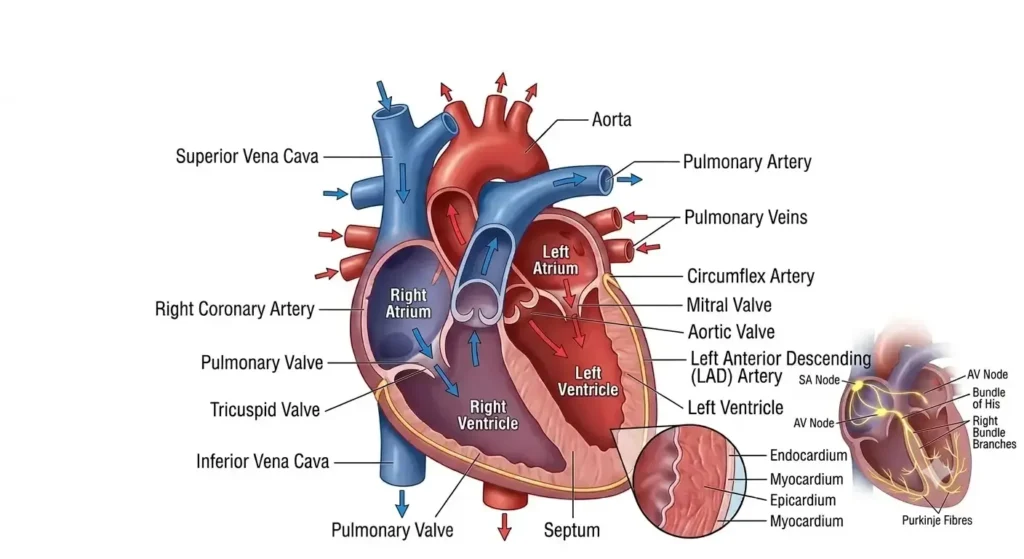

The heart is one of the most important organs in the human body. It works every second to keep blood moving. But do you know the exact heart location? Many people believe the heart sits directly on the left side of the chest. However, its actual position is slightly different. The heart lies near the center of the chest, between the lungs. It sits behind the breastbone and slightly toward the left side. This special position helps protect the heart while allowing it to pump blood efficiently. Understanding where your heart is located can help you learn more about your body. It can also help you recognize unusual chest feelings. In this guide, we explain the heart’s position, structure, functions, and nearby organs. We also discuss common heart-related symptoms and ways to support heart health.
What Is the Heart?
The heart is a strong muscular organ that works like a natural pump. Its main job is to move blood throughout the body. Blood carries oxygen and nutrients to different organs and tissues. It also helps remove waste products, including carbon dioxide. The heart works through repeated contractions and relaxations. These movements create the heartbeat that you can feel through your pulse. An average adult heart weighs around 250 to 350 grams. Its size is roughly similar to a person’s closed fist. However, heart size can vary between individuals. The heart contains four chambers and several important valves. These parts work together to keep blood flowing in the correct direction. Without this continuous process, the body could not function properly.
Where Is the Heart Located in the Human Body?
The heart is located inside the chest cavity, between the two lungs. Its position is slightly left of the body’s center line. It sits behind the sternum, which is commonly called the breastbone. The heart also rests above the diaphragm, the muscle below the lungs. Its upper portion connects to major blood vessels. Its lower pointed end is called the apex. The apex generally points downward and toward the left. This explains why the heartbeat is often easier to feel on the left chest. However, the entire organ does not sit on the left side. A large part remains near the middle of the chest. The surrounding ribs, breastbone, and lungs provide protection. This arrangement allows the heart to pump blood continuously.
Is the Heart on the Left or Right Side?
Many people think the heart is completely on the left side. This common belief is not entirely correct. The heart sits mostly near the center of the chest. However, its lower tip extends toward the left side. This creates the familiar feeling of a heartbeat near the left chest. The heart’s exact position can differ slightly between people. In rare cases, a person may have a condition called dextrocardia. In this condition, the heart points toward the right side. Some people also have other organs arranged differently. These conditions are usually identified through medical examinations. Therefore, feeling your heartbeat on the left does not mean your entire heart is there. Its normal position is central, with a left-facing direction.
Heart Location in the Chest Cavity
The chest cavity contains several important organs. These include the heart, lungs, major blood vessels, and parts of the airway. The heart occupies a central area called the mediastinum. This space lies between the right and left lungs. The heart is also surrounded by a protective covering called the pericardium. This covering contains a small amount of fluid. The fluid helps reduce friction as the heart beats. The breastbone protects the front of the heart. The spine and other chest structures provide additional protection. The diaphragm supports the heart from below. Together, these structures create a safe space for this important organ. Understanding this area makes it easier to understand chest anatomy.
What Organs Are Near the Heart?
Several important organs and body structures sit close to the heart. Their positions help form the central chest area.
- Right lung: Located beside the heart on the right side.
- Left lung: Sits beside the heart on the left side.
- Sternum: The breastbone protects the heart from the front.
- Diaphragm: This breathing muscle sits below the heart.
- Esophagus: This food passage runs behind the heart.
- Aorta: This large artery carries blood from the heart.
- Major veins: These vessels return blood toward the heart.
These structures work together to support important body functions. The lungs provide oxygen to the blood. The heart then pumps oxygen-rich blood throughout the body. The diaphragm helps with breathing. The nearby organs also explain why chest discomfort can have different causes. Not every chest sensation comes from the heart.
Understanding the Four Chambers of the Heart
The heart contains four chambers that work together. The two upper chambers are called atria. The two lower chambers are called ventricles. Each chamber has a special job.
1. Right Atrium: This chamber receives oxygen-poor blood from the body.
2. Right Ventricle: It sends this blood toward the lungs for oxygen.
3. Left Atrium: This chamber receives oxygen-rich blood from the lungs.
4. Left Ventricle: It pumps oxygen-rich blood throughout the body.
The left ventricle has a thicker muscle wall than the other chambers. It needs extra strength to push blood around the entire body. Heart valves help control blood movement between chambers. These valves open and close during each heartbeat. This process keeps blood moving in one direction. All four chambers must work together for healthy circulation.
How Does the Heart Work?
The heart works through a repeated cycle of contraction and relaxation. This cycle is called the cardiac cycle. During relaxation, the chambers fill with blood. During contraction, the heart pushes blood into the lungs and body. The right side sends oxygen-poor blood toward the lungs. The lungs add oxygen and remove carbon dioxide. The left side receives this oxygen-rich blood. It then pumps blood through the aorta. Blood travels through arteries, capillaries, and veins. It eventually returns to the heart. Electrical signals control the timing of each heartbeat. These signals begin in a small area called the sinoatrial node. This natural pacemaker helps maintain a steady heart rhythm. The process continues throughout life.
What Is the Normal Heartbeat?
A heartbeat is the repeated movement of the heart muscle. It pushes blood through the circulatory system. For most adults, a normal resting heart rate ranges from 60 to 100 beats per minute. However, several factors can affect this number. Exercise, stress, fever, and emotions can increase heart rate. Sleep and relaxation may lower it. Well-trained athletes sometimes have lower resting heart rates. You can check your pulse at your wrist or neck. Count the beats for 60 seconds to measure your heart rate. A consistently unusual heart rate may need medical attention. However, one unusual reading does not always indicate a problem. Consider your overall symptoms and health condition.
How Does the Heart Receive Oxygen?
The heart needs oxygen to keep working properly. It receives oxygen through special blood vessels called coronary arteries. These arteries supply oxygen-rich blood to the heart muscle. They spread across the heart’s outer surface. The heart uses this oxygen to produce energy. This energy supports every contraction and relaxation. If a coronary artery becomes narrow or blocked, blood flow may decrease. This condition can cause chest discomfort or other symptoms. Severe blockage may lead to a heart attack. Healthy eating, regular movement, and avoiding smoking support heart health. Medical professionals can also check coronary artery health when needed.
Heart Location and Common Chest Pain
Chest pain can happen for many reasons. Some causes involve the heart, while others involve nearby organs or muscles. Heart-related discomfort may feel like pressure, tightness, squeezing, or heaviness. It may spread toward the arm, shoulder, back, neck, or jaw. Some people also experience shortness of breath, sweating, nausea, or dizziness. However, heart symptoms do not always feel the same. Other causes include acid reflux, muscle strain, lung conditions, and anxiety. You should never assume chest pain is harmless. Sudden or unexplained chest discomfort needs careful attention. Seek emergency medical help if you suspect a heart attack. Do not wait for symptoms to become severe.
How Can You Keep Your Heart Healthy?
A healthy lifestyle can support your heart and blood vessels. Small daily choices can make a meaningful difference.
- Eat balanced meals: Choose fruits, vegetables, whole grains, and healthy proteins.
- Exercise regularly: Walking, cycling, and swimming support heart fitness.
- Avoid smoking: Tobacco damages blood vessels and increases heart risks.
- Limit excess salt: Too much salt can increase blood pressure.
- Manage stress: Relaxation and proper sleep support overall health.
- Check blood pressure: Regular checks can identify possible problems.
- Maintain a healthy weight: Balanced habits support better circulation.
- Attend medical checkups: Healthcare professionals can assess your heart health.
You do not need to change everything in one day. Start with simple habits and build a routine. Consistency matters more than short periods of extreme effort.
How Do Doctors Check the Heart’s Position?
Doctors use different tests to examine the heart and its position. A physical examination is often the first step. They may listen to your heartbeat using a stethoscope. They can also check your pulse and blood pressure. An electrocardiogram, or ECG, records the heart’s electrical activity. An echocardiogram uses sound waves to create pictures of the heart. A chest X-ray can show the heart’s general size and position. Sometimes, doctors recommend a CT scan or MRI. These tests provide more detailed images. The best test depends on your symptoms and medical needs. A healthcare professional decides which examination is suitable.
Can the Heart Change Its Position?
The heart normally stays in the same general area. However, its position can shift slightly with breathing and body movement. The diaphragm moves during inhalation and exhalation. This movement can cause small changes in the heart’s position. Certain medical conditions can cause larger changes. For example, fluid around the heart may affect its movement. Problems involving the lungs can also change chest structures. Some people are born with an unusual heart position. Dextrocardia is one example. These conditions require proper medical assessment. A doctor may use imaging tests to understand the heart’s location. Never try to diagnose an unusual heart position yourself.
Interesting Facts About the Human Heart
The heart has several amazing features. It works continuously without needing conscious instructions. Here are some interesting facts about this powerful organ:
- The average adult heart is about fist-sized.
- The heart contains four main chambers.
- It pumps blood through a large network of vessels.
- Its natural pacemaker helps control heart rhythm.
- The left ventricle has a thick muscular wall.
- The heart sits between the lungs.
- It needs its own blood supply through coronary arteries.
- Its heartbeat changes with activity and rest.
These facts show why the heart is essential for life. Learning about its structure makes human anatomy easier to understand. It also helps explain why healthy daily habits matter. Your heart works hard every day, even while you sleep. Giving it proper care supports your overall well-being.
Frequently Asked Questions About Heart Location
Q1. Where is the heart located in the human body?
The heart is located in the chest cavity between the lungs. It sits behind the breastbone and slightly toward the left side. Its lower tip points toward the left chest.
Q2. Is the heart on the left or right side?
The heart is mostly near the center of the chest. However, its lower pointed end faces the left side. Rare conditions can cause a different position.
Q3. Is the heart located under the left breast?
Part of the heart sits behind the left side of the chest. However, the entire organ is not directly underneath the left breast. It extends toward the center of the chest.
Q4. What organs are located around the heart?
The lungs, diaphragm, esophagus, major arteries, and veins are near the heart. The breastbone and ribs help protect it.
Q5. Can you feel your heart beating in your chest?
Yes, you may feel your heartbeat in your chest. It can become stronger after exercise, stress, or excitement. A noticeable heartbeat is not always a sign of illness.
Q6. When should I worry about pain near my heart?
Seek emergency medical help for sudden chest pressure, tightness, or unexplained pain. This is especially important with breathlessness, sweating, nausea, or dizziness. Do not delay emergency care.
Conclusion
Understanding the heart location helps you learn more about your body. The heart sits between the lungs, behind the breastbone, and slightly toward the left. It contains four chambers that work together to move blood. Nearby organs help protect and support this important muscle. Knowing the basic chest anatomy can also help you understand common symptoms. However, chest pain should never be ignored or diagnosed without proper care. A healthy lifestyle supports better heart function. Eat balanced meals, stay active, and attend regular health checkups. If you notice unusual chest symptoms, speak with a healthcare professional. Your heart works every moment to keep you alive. Give it the attention and care it deserves.